Notice
You are now leaving Polygon Restoration's website and will be directed to another country in the group.
Do you want to proceed?
Notice
You are now leaving Polygon Restoration's website and will be directed to another country in the group.
Do you want to proceed?
The Campbellton Memorial Civic Centre is a multi-sport recreation and event facility in Campbellton, New Brunswick, with ice surfaces used for hockey and other community activities. Preparing the ice season as early as August means the facility can still face warm temperatures and high outdoor humidity, creating challenging conditions as temperatures inside the arena are lowered. Since 2024, the Civic Centre has used desiccant dehumidification during this early-season period to manage excess moisture, reduce condensation and support the conditions needed to create and maintain a consistent ice surface.
Preparing an ice rink while warm and humid summer weather continues outside can create challenging indoor conditions. As temperatures inside the arena are lowered, moisture in the air can condense on colder surfaces throughout the building. At the Campbellton Memorial Civic Centre, the challenge is typically greatest in August, with humidity increasing later in the day as outdoor temperatures rise and people move in and out of the facility. This can lead to condensation on steel surfaces and fogging on the arena glass, affecting visibility for spectators and making it more difficult for facility staff to maintain consistent ice conditions.
“Without dehumidification, we had condensation and water leaking onto the ice, which affected the ice quality. In some areas, the paint on the ice started to come off, and we also saw bumps forming in the ice that were as large as eight inches,” explained Mathieu Bouchard, Building Maintenance Manager at Campbellton Memorial Civic Centre.

The effects of excess humidity were not limited to the ice. During one period without dehumidification, humidity levels became high enough to damage the clock suspended above the centre of the rink. The challenge is also highly seasonal. By September, the amount of dehumidification required typically begins to taper off, and by October, cooler and drier outdoor conditions reduce the need for support. This makes the late-summer period particularly important for managing humidity as the facility prepares its ice for the season.
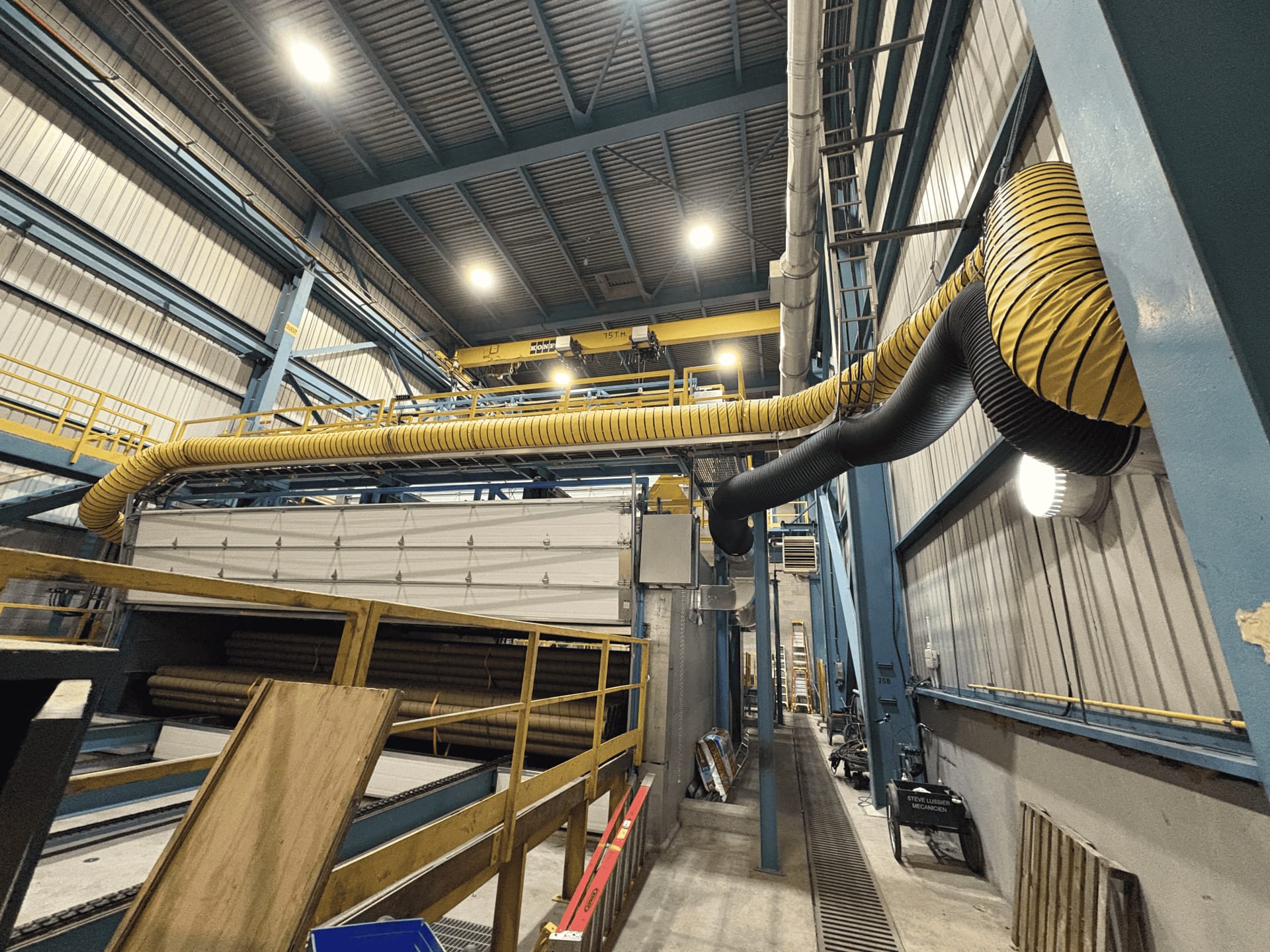
The Campbellton Memorial Civic Centre began using temporary desiccant dehumidification during the 2024 ice season. The solution included two R-10000 desiccant dehumidifiers in both 2024 and 2025, followed by an HC-9000 and HC-4500 for the 2026 season. By removing excess moisture from the air, desiccant dehumidification helped maintain drier conditions as temperatures around the rink were lowered, providing additional humidity management during the late-summer period when preparing and maintaining the ice can be particularly challenging.
With drier conditions inside the arena, facility staff were better able to maintain and resurface the ice while reducing the effects of excess moisture throughout the rink. Lower humidity also supported better conditions around the ice, including clearer arena glass for spectators.

“When Polygon Climate Control’s equipment is running, we don’t have problems with the quality of the ice. We’re able to maintain the same conditions we would normally have during the winter.”
The Civic Centre has now relied on temporary desiccant dehumidification for three consecutive ice seasons. Maintaining consistent conditions during the warmer start of the season is particularly important for the facility, which hosts Junior A hockey and welcomes spectators throughout the season.
“For us, it means we can provide the ice conditions our Junior A team needs while also maintaining a better environment around the rink for the people coming to watch the games. That’s why we’ve continued using the equipment each season,” added Bouchard.

When Polygon Climate Control’s equipment is running, we don’t have problems with the quality of the ice. We’re able to maintain the same conditions we would normally have during the winter.

Emergency call 24hr service
1 888 702-4782Send message
ca_service@polygongroup.comDirect Reaction Team
We are ready to respond on short notice to ensure that real estate and other property restored to its origins in the fastest possible way. We do a quick assessment of the damage to be able to take the right actions
Please contact us with your questions or project requirements. We look forward to assisting you.
4565 Metropolitain Est, Montreal, QC, H1R 1Z4
Tel: 514-326-0555 | Fax: 514-326-1444
24/7 Emergency
1-888-702-4782